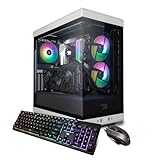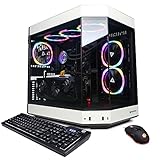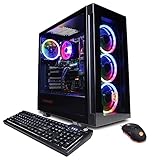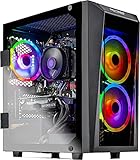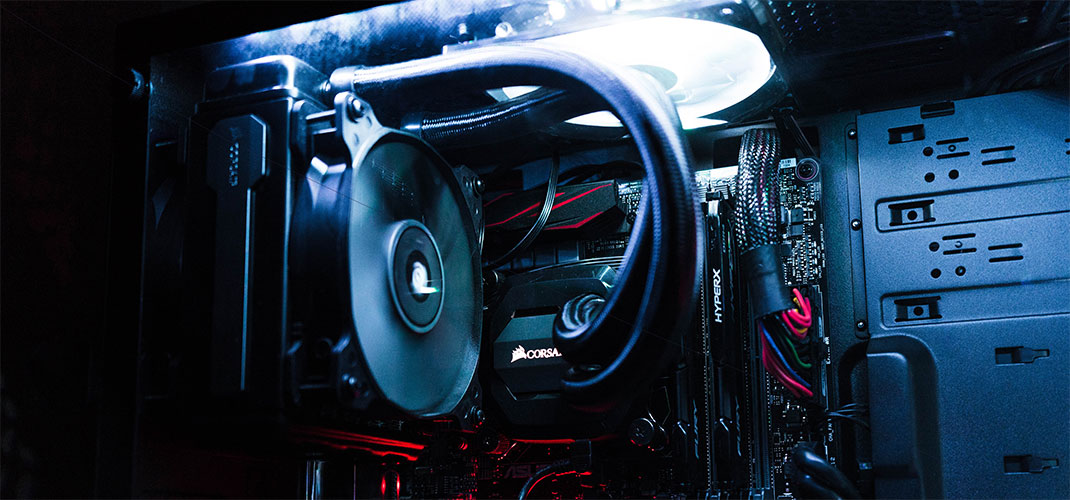
Balancing Speed With Accuracy

One of the key issues with the creation of any new system is balancing the components. A really fast processor can be seriously hobbled by inadequate memory or a very slow disk. We went for the fastest disk we could find, which meant SCSI--not just plain, vanilla fast SCSI, but ultra-wide SCSI, capable of moving data along the SCSI bus at 40 MB/sec. While ultra-SCSI is a bit of overkill for a system with only a single hard disk, this is, after all, the ultimate game PC.

For the motherboard, we picked the Advanced Integration Research (AIR) P6NPI. In addition to the Natoma chip-set, this board has 4 PCI slots and 4 ISA slots (one pair shared) and an onboard Adaptec ultrawide SCSI controller. This board adopts the new ATX form factor, which makes for much less cable clutter in the system--parallel, serial and mouse ports are attached to the back of the board--and better cooling since processor is placed closer to the cooling fan.

It does require a gaming PC vs Xbox360 case and power supply. We chose an In Win IQ-500 full tower case (fewer bleeding knuckles that way) and a PC Power and Cooling Standard ATX power supply. The In Win case has some nice features--especially the slide-out motherboard tray, which makes installation much easier. PC Power and Cooling is the undisputed leader in high-quality PC power supplies.

Of course, with a Pentium Pro, you'd want to have enough DRAM, so we went with 64 MB of true parity EDO DRAM.The Pentium Pro processor itself has 256 KB of onboard cache that runs as fast as the processor.

We wanted the fastest possible hard disk for this system. After much digging, we found that Quantum was preparing to ship its Atlas II ultra-wide SCSI 4.4 GB drives. This disk rotates at 7200 RPM and has an access time of 8 milliseconds--among the fastest around. The Quantum also has a very high bit density, cramming the 4.4 GB onto five platters, possible because of a technology called magneto-resistive heads, or MR for short. Because of the high density of bits on the platters, data can stream off the disk very fast, indeed.

The Atlas II is well matched with the AIR motherboard's onboard SCSI hardware. We wanted a CD-ROM drive that's equally well-matched, so we chose Plextor's new 12x SCSI CD-ROM drive.It boasts an access time of 105 milliseconds and a staggering 1.8 MB/sec max transfer rate, while offering caddyless tray loading. Finally, you need good backup for any system with this much hard disk space.

On the other hand, most gamers don't have gigabytes of mission-critical data, so something like a high-capacity tape drive isn't really necessary. We gamers are, however, an impatient lot, so being able to save and restore backups quickly is important. At first, we considered Iomega's Zip drive, but the low capacity and slowness put us off. We settled on the new Syquest EZ-Flyer 230, the SCSI version, of course. The EZ-Flyer sports hard disk-like performance, along with 230 MB for each 3.5-in. cartridge. The cartridges themselves retail for a mere $ 29.95, cheaper than some high-capacity tapes. PC Gaming Device

In 2006, we( Pentium 133) used the Matrox Millenium as the graphics card for the ultimate PC gaming device. This year, we're sticking with the Millenium,which is still at or near the top of the heap in Windows performance and posts very good DOS game benchmarks as well. There are cards faster in one area or another, but there isn't a better-balanced graphics card on the market, especially matched with our choice of monitor.

The Viewsonic PT-810 uses something Viewsonic calls Sonictron, which is their version of Trinitron technology. The PT-810 has a very sharp image and is also capable of 77 Hz refresh rate at 1600 x 1200 resolutions--a perfect match for the Matrox card's capabilities. It's hard to beat CIVILIZATION 2 played at 1600 x 1200 on a 21-in. monitor.

But what about 3D? The Millennium’s 3D capabilities are pretty bare-bones, at least compared with the current crop of 3D accelerators. That's why we mated it to the Orchid Righteous 3D, which uses the 3Dfx Voodoo chip-set, and works well with the Millennium. The Voodoo has garnered wide industry support for its high-performance 3D technology, and is ideal for our ultimate rig.

No gaming rig would be complete without sound cards and a hot speaker setup. Like last year, we went with Creative Lab's AWE-32 Plug-and-Play. The AWE's MIDI sounds are a little weak, so we added a Yamaha SW60XG Wave force stand-alone wave table card. The Yamaha card uses an 18-bit DAC (digital-to-analog converter) to render the 4 MB of wave table ROM, and sounds superb. You can route the AWE-32's line-level output to the line-in on the SW60XG, and control it using Yamaha's mixer applet, thereby preserving the 18-bit output from the SW60XG's DAC.

Of course, you wouldn't want to pipe these cards through a pair of $ 40 speakers. Last year we suggested a complete audio system with speakers and separate receiver. Since then there have been some pretty hot speaker setups for computers, with better quality drivers and cleaner amplifiers. This year we went for the CrystaLake Multimedia 700 speakers.

These speakers will rock your world, though they command a lofty $ 700 price tag. Since most sound card joystick ports tend to be twitchy, we added CH's GameCard 3 speed-compensated joystick port card.This card has higher-quality components for reading in values from your joystick, and keeps thermal drift (calibration degradation) to a minimum. It comes with CH's TestAll utility, which is useful for verifying calibration settings, and you can reset the card with new speed settings in DOS by reinitializing their driver.

Last year, multiplayer games emerged as the hot feature every game needed to be considered complete. Of course, any computer claiming to be an ultimate game rig couldn't be complete without appropriate ways to connect to other systems for mutual mayhem.

Despite the increasing importance of Internet gaming, nothing beats the visceral experience of getting together with a bunch of friends, networking all the computers together, and having at it. There are a growing number of network gaming groups forming around the country.

The minimum requirement is to have a good networking card. One of the best around is the 3COM Etherlink XL 10/100, which can actually connect at 100 Mbit/sec, but will also mate up with networks supporting a more mundane 10 Mbit/sec. No local gaming group will likely spring for the $ 600-$ 1500 for a 100 Mbit hub, but 10 Mbit hubs are now below $ 100, and twisted pair network cabling is much easier to configure than coax. For those times when you yearn to mix it up with real humans, but can't get your friends together, you need a good modem. Diamond Multimedia's Suprasonic 336V+ is an excellent Plug-and-Play external modem, supporting connect speeds up to 33.6 kbps. All you need then is a Kali license, or hook up with one of the multiplayer gaming services, and you're now connected to a huge universe of would-be targets.

Gaming PC